The most interesting releases of the week(s)!
Solaris was released on Pelagic Records. The Ocean are an iconic progressive metal band, usually blending sludge and post-metal to make engrossing music on a theme for decades now. Their 2014 masterpiece Pelagial is in my top 20 metal albums ever, and they have several other albums that are untouchably great (Anthropocentric and the Phanerozoic albums immediately come to mind. What a stretch of albums). If you’re just looking for amazing, unique metal that will transport you to another world, just know that this is a worthy album, stop reading, and put on the headphones.
However, there are some issues here that make Solaris not quite on par with the band’s best. First, suspension of disbelief comes with greater difficulty than the other albums mentioned above. I haven’t seen the Tarkovsky film that this album is based on, but many of The Ocean‘s best works are about something massive and inhuman: Ocean layers, eras of the dinosaurs, et cetera. This allows the band to soar over a landscape, shifting with the eons they’re covering. Solaris is about a movie. This caps the albums potential lavishness and ambition in a way that The Ocean weren’t able to counter.
The subject matter of Solaris (the album) also makes for some odd sequencing. “Departure Song” through “Belligerence” are some fantastic music, but “Ultimate Esperanza” deflates a bit, and then the album takes almost a full 10 minutes afterwards to sputter out. Maybe this makes sense in the context of the movie, but as a musical experience it’s odd. I am in support of bands writing odd material or making challenging choices, so maybe I’ll come back to this in 5 years and talk about how daring and amazing this record is, but for now, either I don’t get it or it just doesn’t work. Either way it brings the album down a step. Still a great release from one of the best bands around, just not at the top of the mountain.
No One Is Coming To Save Us was released on Church Road Records. Burner start off their album with a mellow melody that slowly shifts through minor chords for about two minutes before the distorted guitars take over for the rest of the album. The rest of the album consists of hardcore and death metal fusion. Burner maintain an emotional throughline from the introduction to the rest of the album, they just twist and squeeze that emotion into a pulp.
Burner‘s special talent is patience. It would have been easier to take the themes they were exploring, the genres they play in, and their strengths as musicians and create a blistering 25-minute record that just runs the listener over for the entire runtime. And while that would have been fun as well, Burner instead stretch out the agony. The band will build towards a resolution and then abruptly collapse into an interlude. Or they’ll let an entirely new idea take over their whole sound before fully addressing their previous passage. Even the minor pauses that just last for a beat or a measure sound significant. No One Is Coming To Save Us also contains plenty of slow builds and smooth transitions, especially coming out of the breakdown, which makes their abrupt, shatter-glass-in-case-of-emergency dime turns much more satisfying.
Annihilist was released on Pelagic Records. In addition to having one of the worst names in prog metal, Hippotraktor have been making excellent psychadelic sludge-y prog for a few albums now, and they deserve more recognition. Their music comes from a similar place as bands such as The Ocean and Dvne. Hippotraktor tend to live in the quieter side of the sound, with waves of music flowing past before they swell and crash into you. But when the band ramps it up, they really ramp it up, with excellent tsunamis contributing to satisfying dynamic contrasts and sounds that feel like journeys.
Vocal variance contributes to Annihilist‘s success. The growls and the clean harmonies give variety to the climaxes of the various passages. Some of the vocal effects that Hippotraktor apply contribute to a feeling of being transported to the album’s world as well. Hippotraktor does have a few songwriting tics that I don’t mind but that will be downsides to some, such as their tendency to hit a single chord with varied rhythms (see “Courageous Apathy”). This does call back to prog/djent from ten to twenty years ago, so if that turns you off, Annihilist might not be for you. But if you’re ok with a good callback, the overall songwriting is excellent, and Hippotraktor‘s choices pay off.
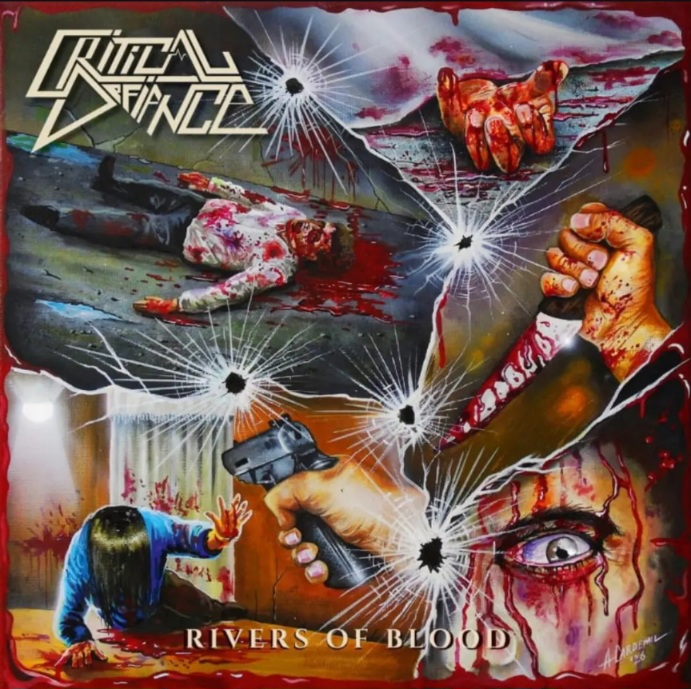
It’s Dying Victims Production thrash. With that album cover. I don’t know man, not much more to say. Rivers of Blood is the fourth album from Chilean thrashers Critical Defiance, and they haven’t taken a step off of the righteous path yet. The production is throwback, the riffs are excellent, the aggression is invigorating, the songs are fast. What Critical Defiance do better than their peers lives in their non-orthogonal songwriting choices. Some of the chord progressions and arpeggiations are just slightly off of what you’d expect from a thrash album released in 1987, which heightens the listeners distrust and raises the energy level of the entire album.
From there, it’s just straight down the middle. Critical Defiance play fast, and when they slow it down they make sure to change the drum and guitar patterns to maintain the impression of aggression. Rivers of Blood is a satisfying album. It’s not trying to be anything other than thrash that’s played to excellence, and I love it for that. Time to go hit play again.
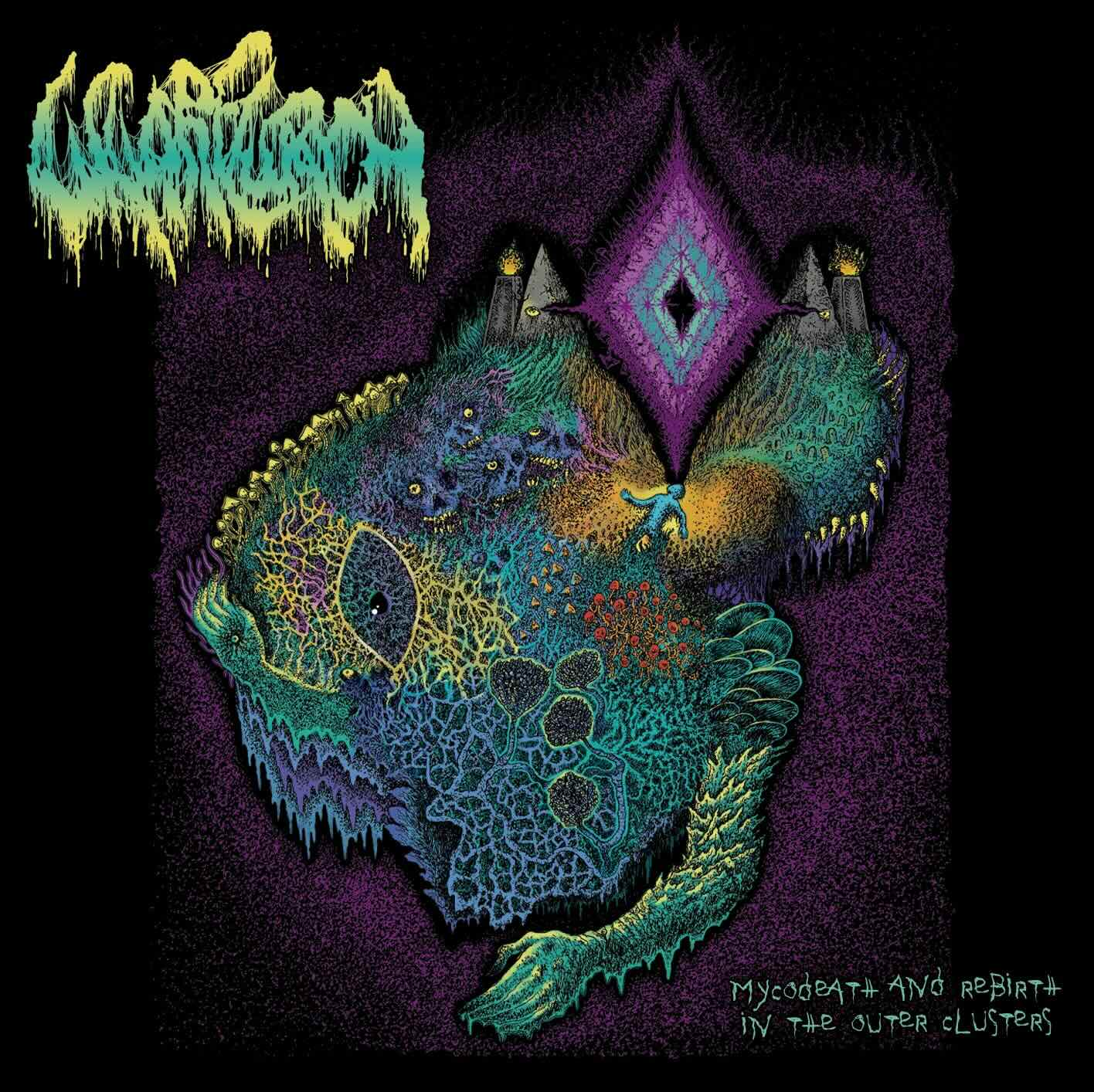
Mycodeath and Rebirth in the Outer Clusters was somehow released on Personal Records, Gurgling Gore, and Dawnbreed. This album follows, among other releases, the triumphant 2021 death metal album Psychadelic Realms ov Hell and the bizarre, unsuccessful demo compilation Shittier/Slimier that has only gotten worse each time I listened to it. So I didn’t know what to expect here. Mycodeath thankfully continues the story and sound of Psychadelic Realms ov Hell, but with an expanded palette. Wharflurch‘s appreciation for Demilich can be heard immediately in the guitar lines. Gorguts influences comes through as well, though not as strongly.
Grounded oddities make Mycodeath successful. At times, Wharflurch‘s creation sounds like an alternate dimension of alien death metal, with unexpected sonic choices that shouldn’t work but do. At other times, Wharflurch come back to Earth and give satisfying death or death/doom passages. This makes a complete package that sounds familiar and refreshing.
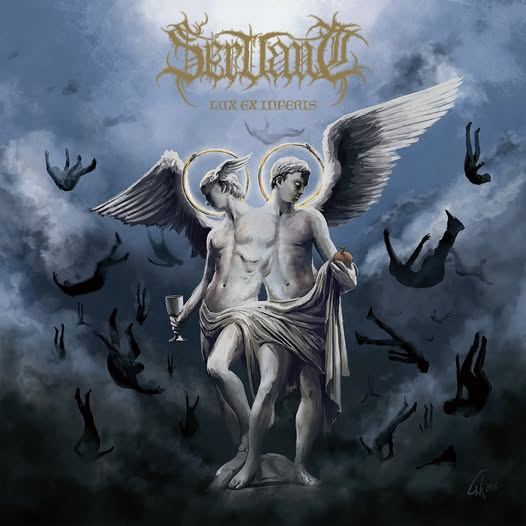
Lux Ex Inferis, released on AOP Records, was never going to match Death Devil Magick. That album was a black metal triumph that doesn’t come along ever year and is still in my regular rotation. So my expectations for Lux En Inferis, Servant‘s fourth full-length release and follow-up to Death Devil Magick, were guarded if excited. Thankfully, this is another great one. Servant play melodic black metal that maintains a thrash-like energy and speed throughout.
Servant keep their sound moving. The middle section of “Tabula Rosa” shows what makes this band so successful. They take the opportunity to tun down the aggression. But during this passage, the guitar line contains enough added notes to the main melody to keep the music sounding fluid and active. This lets the band maintain interest, write captivating melodies and still build towards an excellent climax a few minutes later. The more orthodox black metal passages work just as well due to Servant‘s exceptional songwriting. This band manages to do everything right.
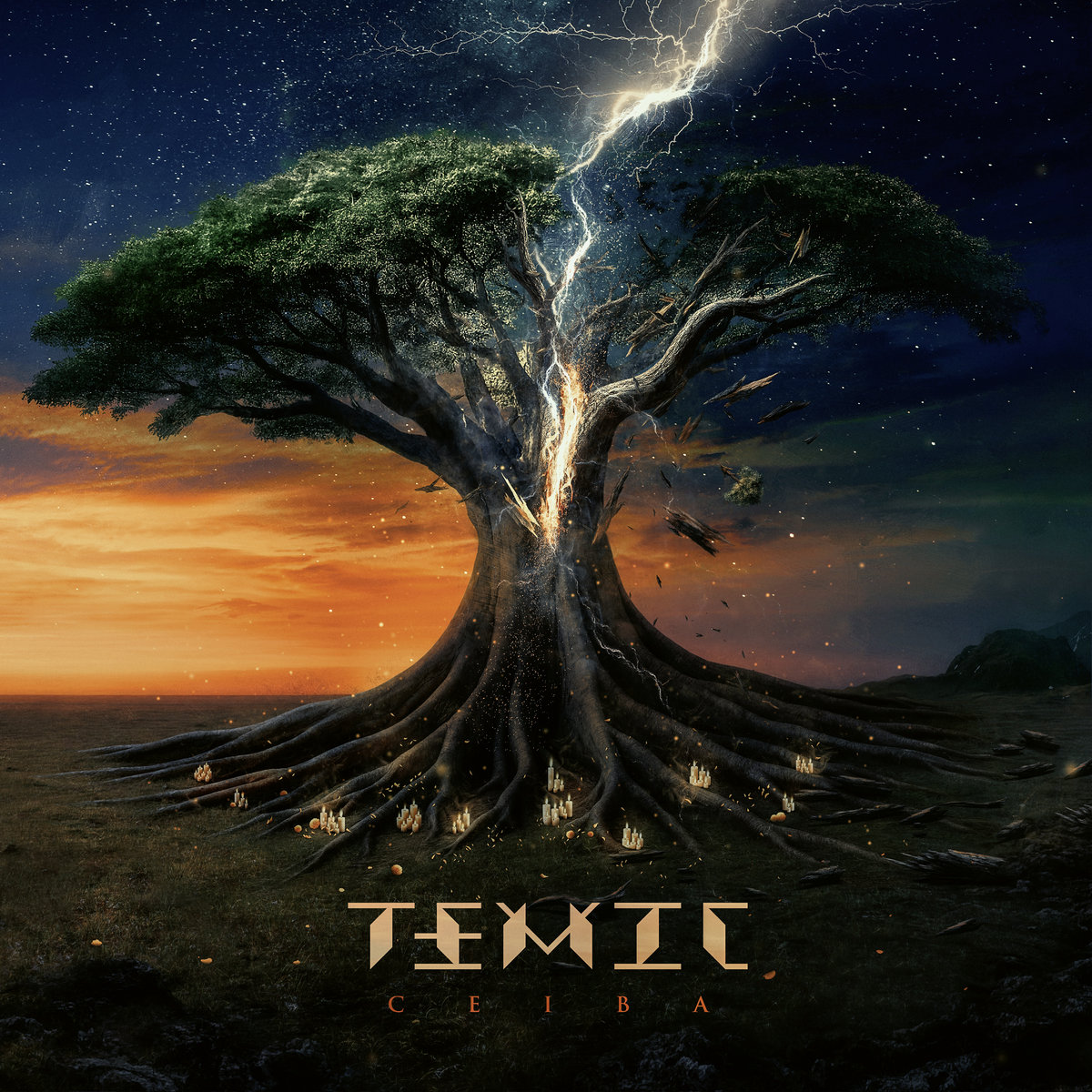
Ceiba was released on Season of Mist. Temic make extravagant progressive metal that combines songwriting of bands like Riverside and Ayreon with the emotional seriousness of Pain of Salvation. Diego Tejeida stated that he’s trying to be honest instead of clever on the track “Broken,” and this songwriting approach seeps through the entire album. Ceiba is a long experience. Temic tend to take melodies and shape them through repetition and slow growth over long stretches of music. And while the occasional guitar solo is refreshing, the band is at their best when they are building foundations that either don’t pay off for a long time, or that morph into their own climax through a series of soft progressions.
Temic sound like prog metal made for theater nerds, and this is meant as a compliment. While the music on Ceiba doesn’t share much with show tunes or bands like Native Construct, the methods used to convey emotion are quite similar. The songs sound smooth. When tracks reach their apex, it’s done in a soft manner, as if the band is trying to bring the listener along with them rather than blow them away. This is an album that will appeal more to prog rock fans than to metal fans, but those that appreciate the style will find immense enjoyment.
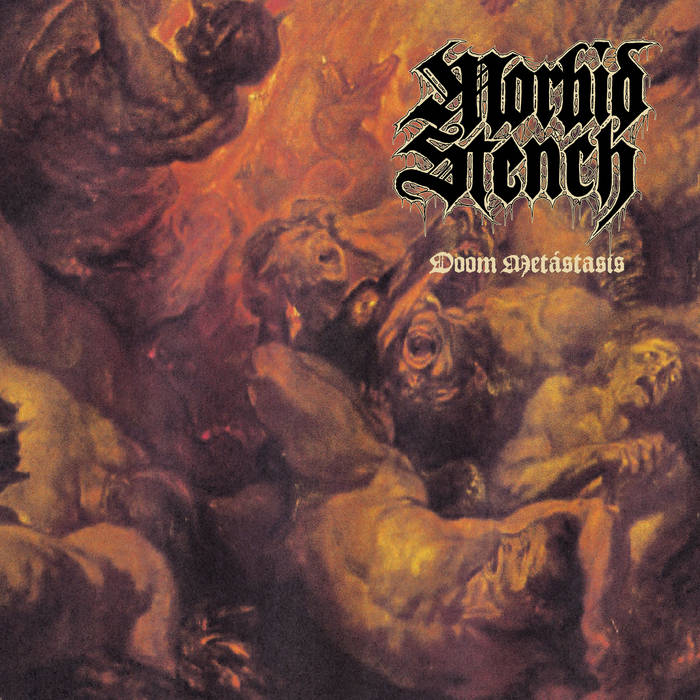
It’s death/doom. It’s very appropriately named death/doom. Doom Metastasis was released on Nuclear Winter Records and Putrid Cult. I haven’t listened to an album this reliant on guitar tone in a while, but Morbid Stench pull it off. The vocals are also a stand-out. The deep, deep guttural growls contain plenty of expressiveness and blend in well with the guitar lines. Morbid Stench often just linger on a particularly nasty note, letting it drift over the listener while they contemplate what they’ve done. It always works.
The guitar lines are just so well-written. It’s difficult to write slow music that hangs together. Morbid Stench play cohesively when they’re punishing the listener at 1 beat per minute, and when they pick up the pace to a slow walk and let the guitars lay waste. Domm Metastasis wouldn’t be anywhere near as successful if the riffs themselves weren’t amazing.
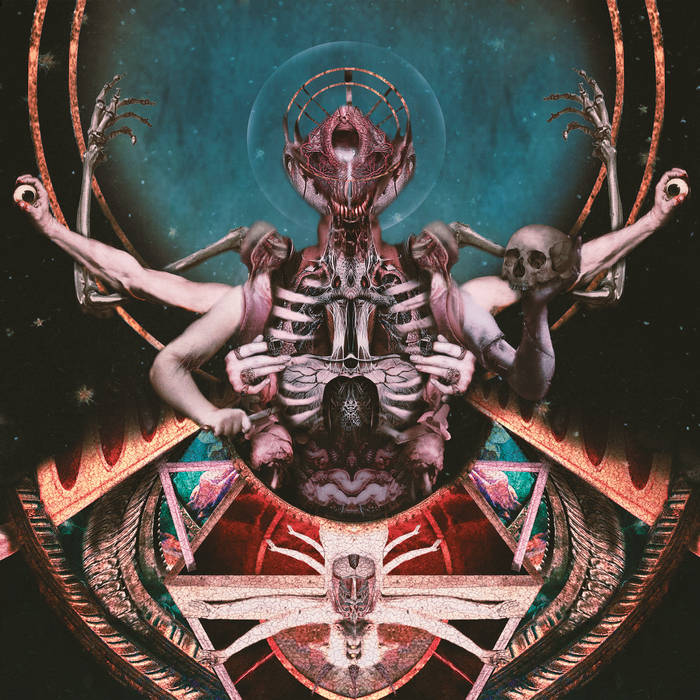
Esoctrilihum‘s newest release was, shockingly, from I, Voidhanger Records. Annochiül Xar Sorthïlazur follows a quartet of 2025 full-lengths, and one per year seems to be a much better pace for this artist. Over a 70-minute runtime, this album throws you all of the esoteric black metal tricks that have made Esoctrilihum so loved and so dismissed. Operatic vocals and orchestral swells haphazardly fit into a metal base while songs abruptly change tone. It’s not always clear what is carefully crafted and what was kept in the moment because it sounds need. Regardless of anything else, Esoctrilihum push boundaries.
Annochiül Xar Sorthïlazur is one of the more successful releases from this project. The band’s biggest weakness, somehow, is a lack of identity. On their weaker projects it can feels as if the songs are weird for the sake of being weird, and the albums blend together into a mush that is easily forgotten. Annochiül Xar Sorthïlazur is somewhat more focused than that. Time will tell where this actually stands in the sprawling Esoctrilihum catalog, but after a few listens it is at minimum worthy of attention, with a ceiling of being a landmark release.